 STOMA Care App
Stoma Information
Stoma Location
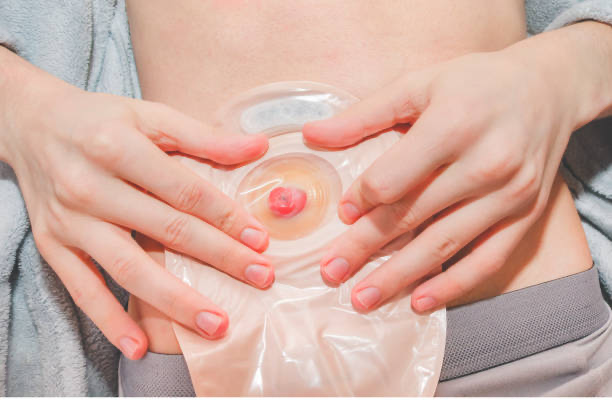 The typical location for a stoma is above the waistline, on a flat part of the abdomen and away from deep body folds and scars. It sticks out just above the skin.
- The actual location and size of your stoma will depend on the type of surgery you have and the shape of your abdomen.
- Most changes in stoma size take place within the first six months after surgery, but may occur at any time.
- Stoma size and location might also change if you lose or gain a lot of weight.
- Before surgery, make sure to ask your surgeon where your stoma will be located on your abdomen and how to take care of it.
Stoma Pouch System
Parts of the Stoma Pouch System
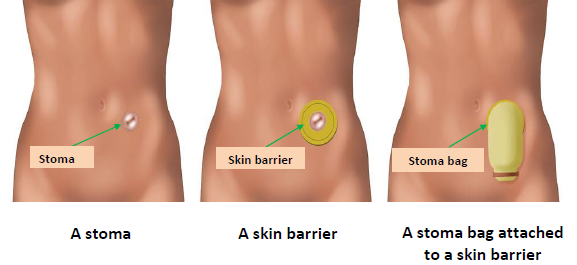 The stoma pouch system has two parts: the pouch and the barrier.
- The pouch holds waste that leaves your stoma.
- There are two types of pouches: drainable and non-drainable.
- Adhesive: The barrier connects the barrier to your skin using an adhesive. Frequent changes of the barrier can cause redness and soreness of the skin around the stoma. For this reason, it is best to change the barrier no more than twice per week.
- Adhesive connects the barrier to your skin. Frequent changes of the barrier can cause redness and soreness of the skin around the stoma. For this reason, it is best to change the barrier no more than twice per week.
- Drainable pouches can be emptied from the bottom without removing the pouch. This reduces the number of times you need to change the pouch.
- Drainable pouches can stay attached to your skin for several days, while non-drainable pouches must be changed every time you empty them.
Drainable One-Pouch System
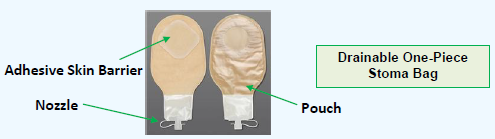
The pouch and barrier are one piece. The drain allows waste to be emptied from the bottom without removing the pouch. The pouch can remain attached to the skin for several days.
Drainable Two-Pouch System
- The pouch and barrier are separate pieces. The pouch can be changed without removing the skin barrier. This reduces the time and effort needed to change pouches. It also eliminates unnecessary wear and tear of the skin around the stoma.
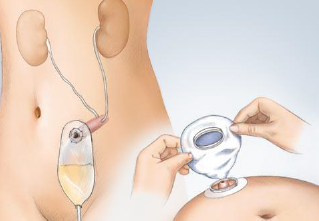
- The two-piece system may also have a drain, which can be emptied from the bottom without removing the pouch (see pictures below). Drainable two-pouch systems can stay attached to your skin for several days.
- Talk with your physician and your WOC nurse about what type of stoma pouch is right for you.
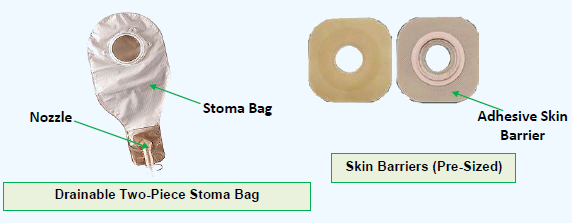
Comparison: One-Piece System vs. Two-Piece System
ONE PIECE SYSTEM
The barrier and the pouch are connected as single unit. The pouch may be drainable or non-drainable.
Advantages of the 1-piece system
- It’s easy to put on and maintain
- It’s slim and less noticeable under clothing
- The barrier is flexible and more comfortable than rigid barriers
Disadvantages of the 1-piece system
- The pouch's position can’t be adjusted after attaching it to your skin
- You have to remove the barrier and pouch if you want to change the pouch or switch to a different type of pouch
TWO PIECE SYSTEM
The barrier and the pouch are separate units that you connect.
Advantages of the 2-piece system
- You can change the type and/or size of the pouch without removing the barrier
- You can change the pouch as often as needed without removing the barrier
- Applying the barrier to your skin is easier because you can easily see the stoma
Disadvantages of the 2-piece system
- May be more difficult to put on than 1-piece system
Peristomal Accessories
The term peristomal refers to the area of skin right around the stoma.
Liquid Adhesive
- To improve the adhesion of the skin barrier to the skin
- Sprayed on or brush applicator
- Applied to skin or skin barrier
Stoma Powder
- Helps dry moist skin
- Dust on and brush off excess powder
- Can be used to seal with a skin barrier wipe
Flat Barrier Rings
(More commonly known as Eakin Seal)
- A flat barrier ring fills in any gaps between your skin and the skin barrier to prevent leakage
- It enhances durability of the pouch system
- The rings may be stretched to fit your stoma size
- Apply the ring to clean dry skin or apply to the adhesive side of the skin barrier on the pouch system
Barrier Strips
- Help fill in skin creases to prevent leakage
- Strips can be cut to various lengths.
Ostomy Paste
- Also known as stomahesive paste
- Ostomy paste is used to make a seal around the skin barrier opening
- The paste is not an adhesive or glue
- Too much paste can interfere with a good pouch seal
Skin Protective Wipes
- Protective wipes are used to help remove the skin barrier or tape from fragile skinUse on intact skin
- Some wipes contain alcohol, so use it on intact skin only
- After using protective wipes, allow your skin to dry completely before applying a fresh pouch system
- Protective wipes may decrease the length of time an extended-wear skin barrier can be used
Adhesive Remover Wipes
- Adhesive remover wipes are used to remove adhesive residue
- They can also be used to help remove a skin barrier or tape
- Usually not needed with each pouch change
- Must be washed off with soap and water after use